Continuous Provision – The Magic of Everyday Spaces
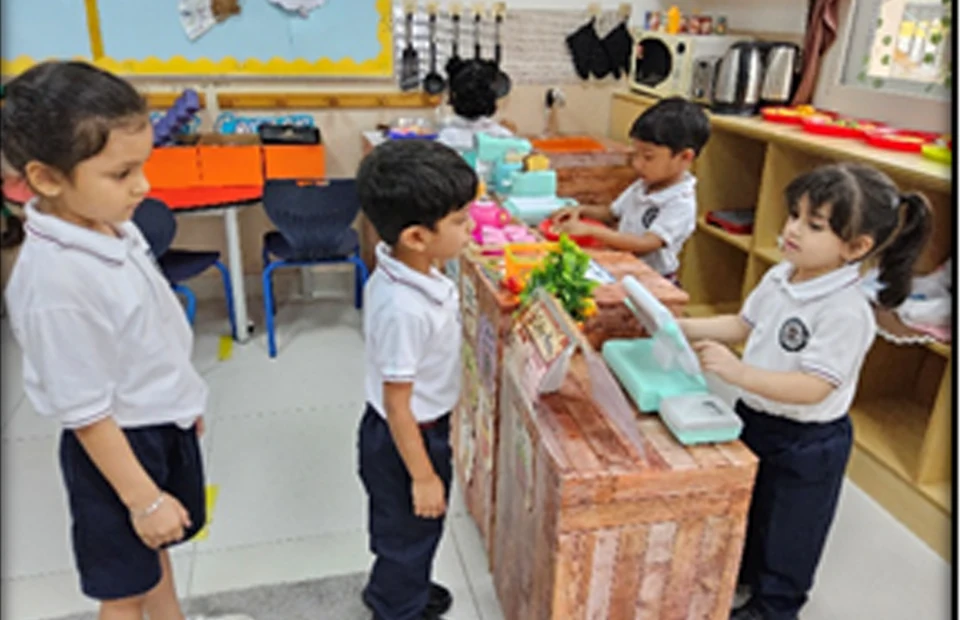
In the Early Years, some of the most meaningful learning happens in simple, everyday moments. I still remember a child in my class balancing two blocks and proudly saying, “Look! I made a bridge!” That small moment reflects the essence of Continuous Provision—children learning naturally through curiosity, choice, and exploration.
As a teacher, what I love most about my school is that every learning space has a purpose. Thoughtfully planned areas such as blocks, role play, reading, art, sensory play, construction, and fine motor stations are available every day, providing children with meaningful opportunities to explore, create, investigate, and grow independently.
Learning Through Play
Through hands-on exploration—building, creating, imagining, investigating, and role-playing—children naturally develop a wide range of essential skills. These everyday experiences strengthen language and communication, enhance fine and gross motor development, foster friendships and cooperation, deepen early mathematical and scientific understanding, encourage creativity and emotional expression, and build resilience, critical thinking, and problem-solving abilities. Every interaction within these carefully designed learning spaces contributes meaningfully to a child’s holistic development.
When children choose activities that interest them, their engagement deepens and learning becomes meaningful.
As they play, they also begin to build independence—making choices, taking risks, and learning from their own actions.
Building Independence
Building independence in early years — Familiar, inviting spaces empower children to make choices confidently, solve problems, and take responsibility for their learning. As they select activities, tidy up, and persevere through challenges, they develop self-regulation, confidence, and essential life skills.
Once children begin to show independence in these spaces, the teacher’s role naturally shifts—this is where teachers step in as facilitators, guiding learning with intention while allowing children to take the lead.
Continuous Provision gives them the freedom to explore while gradually strengthening their independence.
The Teacher’s Role
In Continuous Provision, the teacher becomes an observer, guide, and facilitator. By watching children closely, I understand their interests and needs, allowing me to introduce new vocabulary, add challenges, or ask open-ended questions that extend thinking.
There are many moments teachers can support independently—modelling language, enriching play, and extending ideas.
But there are also areas where children need the combined support of both teachers and parents to reinforce routines, behaviour expectations, and learning habits.
Partnership with Parents
When families understand the purpose of these learning spaces, they begin to notice similar learning at home—children pouring water, arranging toys, retelling stories, or building with blocks.
When teachers and parents work together, taking shared responsibility for guidance and reinforcement, children become confident, capable, and self-assured learners.
This partnership strengthens independence, creativity, and consistency across home and school.
Confident, Capable Learners
The impact is visible every day. Children become more expressive, independent, and joyful. They take pride in their choices and feel valued and capable.
Continuous Provision is more than a teaching approach—it is a philosophy that respects how young children naturally learn. When the environment is rich, open, and thoughtfully planned, children flourish.
Learning grows where curiosity thrives, choices matter, and every child is empowered to shine.
Ms. Abhilasha Gera
Class Teacher – Pre KG B